Building the ideal sound production PC requires a careful balance of performance, reliability, and specialized hardware that caters specifically to the demanding nature of audio creation. Sound production is an intricate process involving multi-track recording, real-time effects processing, mixing, and mastering. Each of these tasks demands a system that not only delivers raw computing power but also maintains low latency and superior audio fidelity. To achieve studio-tuned performance, it is essential to select components that work harmoniously to provide a smooth, glitch-free workflow. At the core of any high-performing sound production PC is the processor. Audio production software benefits greatly from CPUs with multiple cores and threads, as they can handle numerous audio tracks and plugins simultaneously. A modern multi-core processor from recent generations with high clock speeds ensures efficient real-time processing and quick rendering of audio files. While raw power is critical, the ability of the CPU to maintain low-latency processing, which minimizes audio dropouts and delays during recording and monitoring, is just as important.
Complementing the CPU, the system’s memory must be ample and fast. Audio projects, especially those involving large sample libraries and multiple tracks, can quickly consume significant amounts of RAM. A minimum of 16GB is recommended for basic production, but 32GB or more provides greater headroom and future-proofs the setup against increasingly complex projects. Fast DDR4 or DDR5 memory modules improve the overall responsiveness of the system, allowing quicker loading and manipulation of sound files. Storage choices also play a vital role in the performance of a sound production PC. Traditional hard drives are often too slow for professional audio work. Instead, solid-state drives SSDs, particularly NVMe M.2 SSDs, offer rapid data access speeds that reduce load times for audio samples and projects. Having a dedicated SSD for the operating system and audio software ensures quick startup and smooth operation, while additional SSDs or external drives can be used for storing large sound libraries and backup files. Equally important is the audio interface, which acts as the bridge between the computer and the studio equipment. A high-quality external Digital audio workstation interface provides superior analog-to-digital and digital-to-analog conversion, delivering pristine sound quality and ultra-low latency.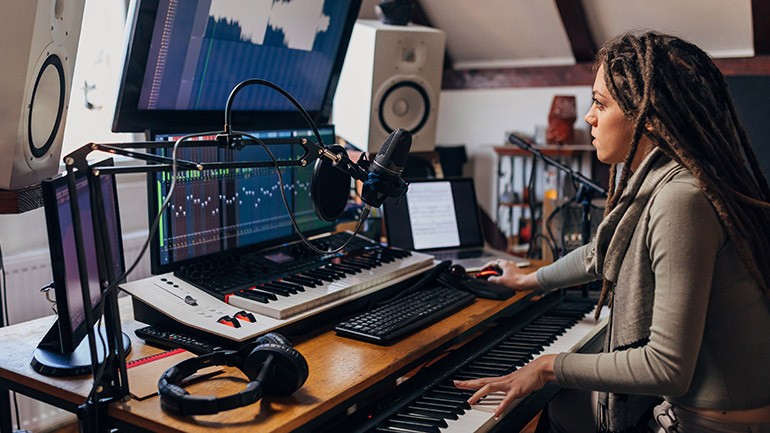
Interfaces with multiple input and output channels allow for flexible recording setups, supporting everything from single-mic sessions to full band recordings. Features like MIDI support, headphone monitoring, and built-in preamps further enhance the functionality for various production needs. The motherboard should be chosen to support all these components while ensuring stable power delivery and excellent connectivity. Look for boards that offer multiple USB ports, Thunderbolt or high-speed data connections, and expansion slots for adding extra hardware like DSP accelerators or additional audio cards. Reliability and durability in the motherboard help maintain system stability during long recording sessions. Cooling solutions should not be overlooked either. Sound production can involve long hours of CPU-intensive tasks, so an efficient cooling system is crucial to prevent thermal throttling and ensure consistent performance. Quiet cooling options, such as high-quality air coolers or liquid cooling systems with noise-dampening features, maintain a distraction-free studio environment.